Suahasil Nazara Appointed as Minister of Finance in Major Cabinet Reshuffle Under President Prabowo Subianto

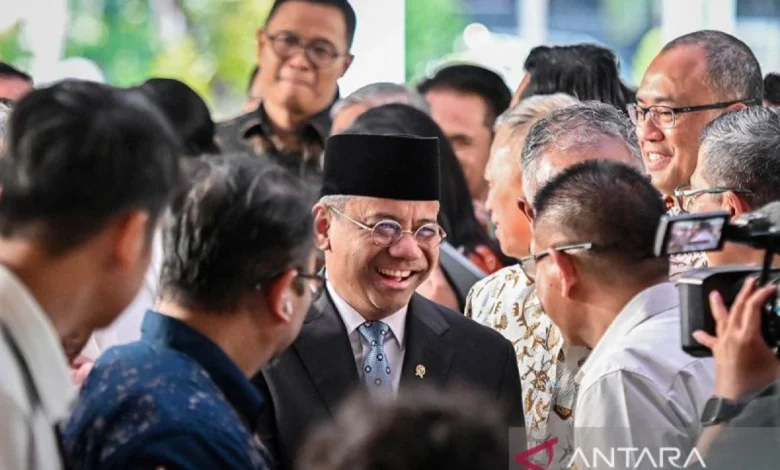
In a significant realignment of the executive branch, President Prabowo Subianto announced a major restructuring of the Kabinet Merah Putih (Red and White Cabinet) on Monday, September 14, 2026. The most prominent change in this sixth reshuffle of the current administration is the appointment of Suahasil Nazara as the new Minister of Finance, succeeding Purbaya Yudhi Sadewa. The transition of leadership at the Ministry of Finance marks a pivotal moment for Indonesia’s economic governance as the administration approaches the conclusion of its second year in power.
The ceremony, held at the State Palace in Jakarta, solidified a shift in the cabinet’s economic team. Suahasil Nazara, who previously served as the Deputy Minister of Finance, brings a wealth of experience to his new role. Having formerly held the position of Head of the Fiscal Policy Agency (BKF), his appointment is viewed by analysts as a strategic move to ensure continuity and technical expertise in managing the national budget during a period of global economic volatility.
A Chronology of Leadership Transitions
The appointment of Suahasil Nazara makes him the third individual to hold the finance portfolio under the Prabowo-Gibran administration. The timeline of this critical ministry reflects the dynamic and often rapid changes characteristic of the current government’s approach to fiscal management.
At the start of the administration in October 2024, the government relied on the continuity of seasoned technocrats to stabilize the economy. However, as policy priorities evolved, the presidency sought to integrate different perspectives into the treasury. Following the tenure of Sri Mulyani Indrawati, Purbaya Yudhi Sadewa took the helm. His departure this week, after a period of intense scrutiny over budget execution and revenue collection, marks the conclusion of the second transition in this office in less than two years.
Background and Professional Profile of Suahasil Nazara
Suahasil Nazara is a career technocrat whose ascent to the position of Minister of Finance is the culmination of decades of public service. Prior to his appointment as Minister, his role as Deputy Minister allowed him to oversee the intricate day-to-day operations of the Ministry of Finance, including tax reform initiatives, debt management, and the implementation of fiscal incentives designed to stimulate industrial growth.
His academic background in economics and his tenure at the Fiscal Policy Agency provided him with a comprehensive understanding of the structural challenges facing the Indonesian economy. Observers note that his intimate knowledge of the current budget cycles will likely shorten the transition period, allowing the Ministry to maintain momentum in critical projects, such as the digital transformation of the taxation system and the expansion of the social safety net.
The Sixth Reshuffle: Context and Political Strategy
The September 14, 2026, reshuffle is the sixth such intervention by President Prabowo since taking office. While reshuffles are common in parliamentary and presidential systems to refresh the cabinet, the frequency of these changes in the Prabowo-Gibran administration has drawn significant attention from political analysts and international investors.
The government maintains that these changes are not signs of instability, but rather a reflection of the President’s "dynamic management style." In various public statements, President Prabowo has emphasized that his cabinet must function at a high tempo, often describing the work of his ministers as a "non-stop" endeavor. This philosophy suggests that the President expects immediate, tangible results from his appointees. When performance metrics, particularly regarding budget absorption or economic growth targets, do not meet expectations, the administration has shown a willingness to make rapid personnel adjustments.
Official Statements and Policy Outlook
Immediately following his inauguration, Minister Suahasil Nazara addressed the press, signaling a commitment to fiscal discipline. "My primary mandate is to ensure that the State Budget (APBN) remains healthy, credible, and, most importantly, continues to serve the needs of the Indonesian people," Nazara stated. He emphasized that the government would adhere strictly to the legal thresholds regarding the budget deficit, a move intended to reassure both domestic and international credit rating agencies.
The Ministry of Finance faces a challenging landscape. With global inflationary pressures, fluctuating commodity prices, and the need to fund large-scale infrastructure and social welfare programs, the balancing act required of the Minister of Finance is immense. Nazara’s focus on "credibility" is widely interpreted as a signal that the government intends to maintain a conservative fiscal stance while simultaneously seeking innovative ways to boost non-tax revenue.
Impact on the Indonesian Economy
The financial markets have reacted with cautious optimism to the news. The continuity provided by a long-time insider like Nazara is generally perceived as a stabilizing factor. Investors typically look for predictability in economic policy, and the appointment of a career civil servant to the top finance post is often viewed as a signal that the government values institutional knowledge over purely political appointments.
However, the broader implications of the reshuffle extend beyond the Ministry of Finance. As the cabinet undergoes frequent adjustments, the challenge remains for the government to maintain a cohesive long-term economic strategy. Analysts argue that while short-term efficiency is gained through personnel changes, the administration must ensure that these changes do not disrupt the long-term planning required for major economic reforms, such as the energy transition and the development of the new capital city, Nusantara.
Monitoring Fiscal Health
Under the current administration, the APBN has been tasked with two competing objectives: driving growth through stimulus and maintaining fiscal sustainability. The data provided by the Ministry of Finance in recent quarterly reports indicates that while revenue collection remains on track, expenditures have been under significant pressure.
Suahasil Nazara’s tenure will likely be defined by his ability to navigate this tension. His previous experience at the Fiscal Policy Agency suggests a preference for evidence-based policy. It is expected that the Ministry will conduct a thorough audit of ongoing fiscal programs to identify areas where spending can be optimized without compromising social services.
Response from Stakeholders and Academia
The academic community has expressed mixed but generally positive reactions to the reshuffle. Economists have noted that while the high turnover rate in the cabinet could cause temporary bureaucratic friction, the appointment of individuals with deep technical backgrounds is a positive development. "The shift in leadership at the Ministry of Finance is a clear attempt to recalibrate fiscal strategy," said one senior researcher at a Jakarta-based economic think tank. "The challenge for the new Minister will be to balance the political demands of the cabinet with the rigid requirements of fiscal math."
Furthermore, business associations have signaled their desire for a stable regulatory environment. The Chamber of Commerce and Industry (KADIN) has welcomed the appointment, citing the need for a Minister who understands the complexities of the private sector’s contribution to the national economy.
Looking Ahead: The Challenges for the Red and White Cabinet
As the administration moves forward, the focus will shift to how the new cabinet structure influences the delivery of government programs. The President’s emphasis on working "without holidays" and his high expectations for his ministers have set a rigorous pace for the remainder of the term.
The upcoming months will be critical for the Ministry of Finance. With the budget season approaching, Minister Suahasil Nazara will be responsible for navigating the legislative process to ensure the 2027 budget is approved in a timely manner. His performance in these initial months will likely serve as a benchmark for the success of the latest cabinet reorganization.
In conclusion, the appointment of Suahasil Nazara as the new Minister of Finance represents a strategic pivot for the Prabowo administration. By selecting a seasoned professional to manage the nation’s finances, the President has prioritized fiscal stability and technical proficiency. As Indonesia continues to navigate an increasingly complex global economic landscape, the success of the government’s fiscal agenda will depend on the effective collaboration between the new Finance Minister, the economic coordinating team, and the various stakeholders who rely on the health of the national budget. The coming months will provide a clearer picture of whether this latest reshuffle provides the necessary momentum to achieve the administration’s ambitious economic goals.